Forestry mulching vs lot clearing North Port property owners are considering often comes down to one important question: What do you plan to do with the land afterward? Managing overgrown vegetation, opening selected areas, and preparing a property for construction can require different levels of clearing and site preparation.
For homeowners and commercial property owners in North Port, forestry mulching may be appropriate when the goal is to manage vegetation while preserving selected trees and natural features. Lot clearing generally involves a broader project scope, particularly when the property needs additional work before landscaping or construction.
Michel’s Landscaping offers forestry mulching, lot clearing, forest clearing, and site preparation services throughout North Port and surrounding Southwest Florida communities. This guide explains the differences, when each approach may be appropriate, and five important questions to ask before requesting an estimate.
Forestry Mulching vs Lot Clearing North Port: What’s the Difference?
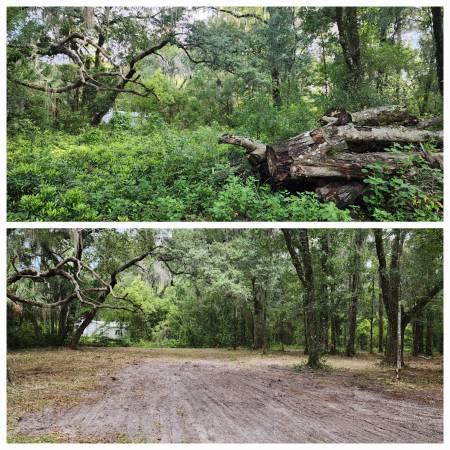
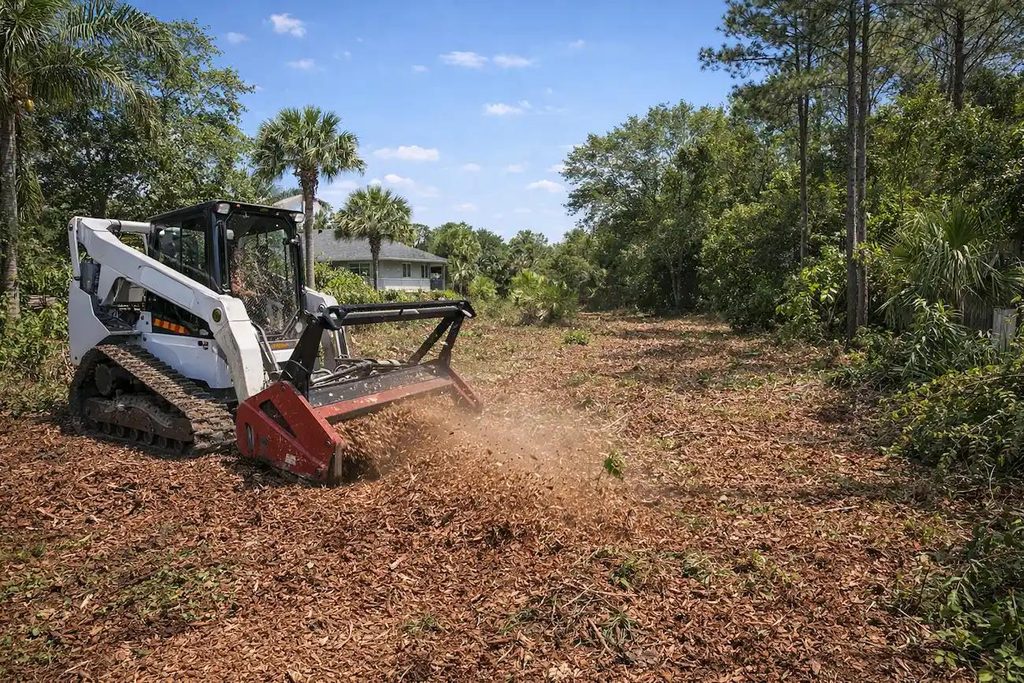
Forestry mulching describes a vegetation-management method: vegetation is processed into material that remains on the site. Lot clearing describes a broader project goal: removing unwanted growth and other obstacles from a defined area. A clearing plan may involve several services rather than one operation.
The terms are not necessarily competing choices. A property could need selective vegetation work in one section and more extensive clearing in another.
The important distinction is the finished condition. Do you want a more manageable wooded area, or do you need a space prepared for additional excavation, grading, or landscape installation? Those outcomes call for different conversations about trees, stumps, debris, and soil work.
When forestry mulching is worth discussing
Forestry mulching may be an option when your main goal is managing unwanted vegetation rather than preparing a finished construction surface.
It is worth discussing if you want to:
- Open overgrown portions of a property while retaining selected trees or landscape features.
- Improve access to areas you want to maintain.
- Manage vegetation on land that is not immediately scheduled for building.
- Evaluate an approach that leaves processed vegetation on the property rather than specifying removal of all material.
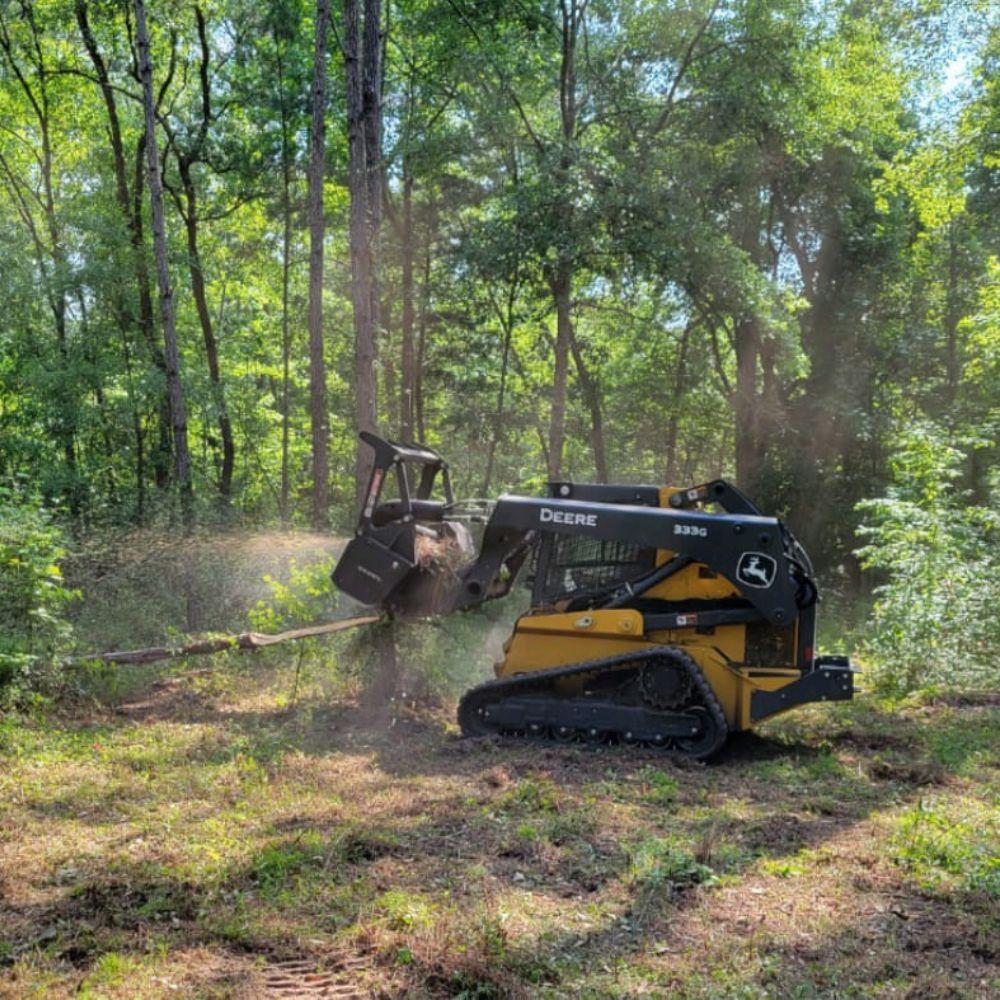
Suitability still requires a site-specific discussion. Identify the vegetation to be addressed, the features to preserve, and whether retained material fits your plans.
Do not assume that mulching includes stump removal, grading, or preparation for a house pad. If any of those are part of the intended outcome, include them in the project description from the beginning.
When a broader lot-clearing plan makes more sense
Start with a lot-clearing discussion when you need a defined area opened for a specific improvement, such as a building project or substantial property renovation.
Rather than describing the job only as vegetation removal, explain what will occupy the space. A future house, a landscaped yard, and an access area can have different preparation needs.
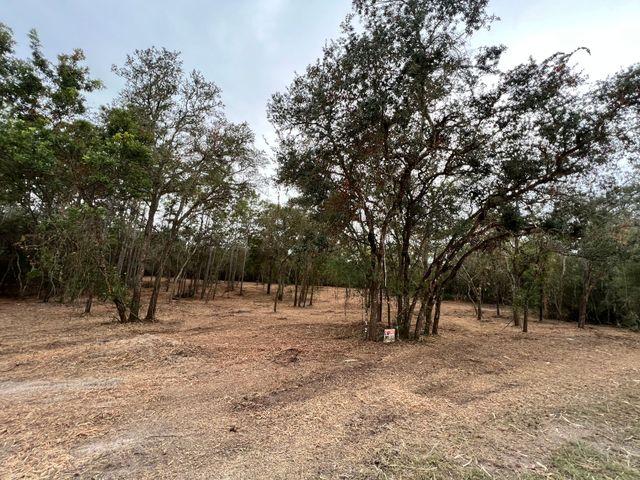
Michel’s Landscaping’s forest clearing services include selective clearing and larger land preparation projects. That makes the clearing conversation about more than removing everything: it also involves deciding what to retain and how much of the property needs work.
Depending on the plan, ask whether the proposed scope addresses tree removal, stumps, debris handling, and follow-on grading. These should be explicit items, not assumptions attached to the word “clearing.”
Planning to build? Separate clearing from house pad preparation
Removing vegetation is not the same as preparing a house pad. If construction is the goal, discuss clearing and grading as connected but distinct parts of the project.
Michel’s Landscaping offers house pad grading, including site evaluation, grading planning, soil shaping, layered compaction, and drainage considerations.
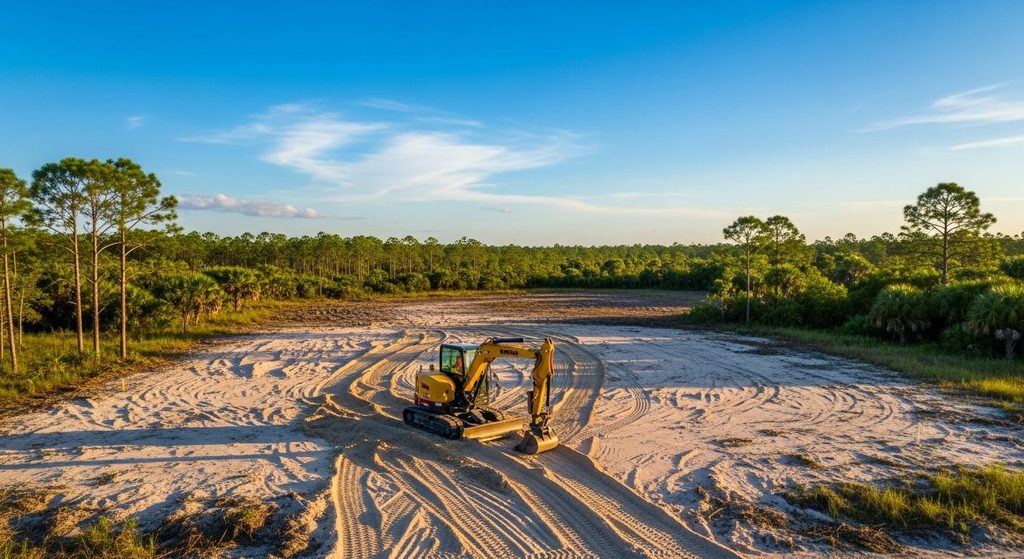
Provide available plans and explain how the clearing work relates to the proposed building area. Ask where the clearing scope ends and what additional preparation will be needed. Do not treat a cleared appearance as confirmation that a site is ready for construction or that project requirements have been met.
For properties being prepared for construction, stormwater management may also be part of the planning process. The EPA’s construction stormwater guidance explains why erosion, sediment runoff, and applicable stormwater requirements should be considered during site development.
For a North Port property, include drainage in that discussion rather than treating it as a finishing detail. Share any observations about standing water or how water moves across the land, without assuming vegetation removal alone will resolve those concerns.
Five questions to answer before requesting an estimate
1. What will you use the area for?
Be specific. “I want to maintain the back portion of the lot” is a different request from “I want to prepare the proposed house location.” If the work will happen in phases, explain the immediate goal and the eventual plan.
2. What must remain untouched?
Before work involving ground disturbance begins, underground utilities should be addressed through the appropriate notification process. Sunshine 811 provides information about requesting utility locates in Florida. Utility markings do not replace verification of property boundaries or other site constraints.
Identify trees, planting areas, irrigation components, and other existing features you want preserved. Provide available boundary information and point out any areas where the limits of work need clarification.
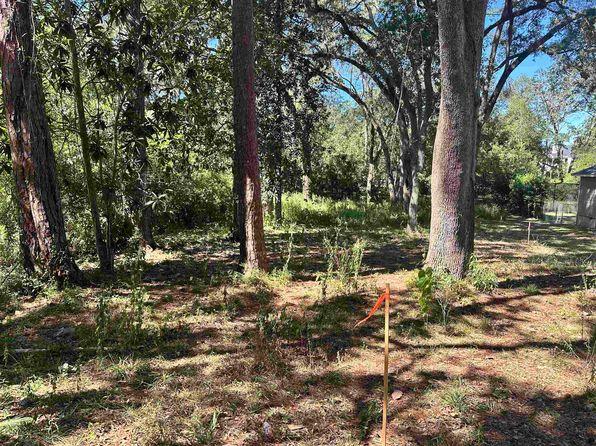
Before removing existing vegetation, consider whether any established trees or plants should remain part of the property’s future landscape. The UF/IFAS Florida-Friendly Landscaping program provides guidance on selecting appropriate plants and planning landscapes suited to Florida’s environmental conditions.
3. What finished condition do you expect?
Clarify whether processed vegetation can remain, whether debris should be hauled away, and whether stumps need separate attention. A shared definition of “finished” helps make estimates easier to compare.
4. Is additional equipment work part of the project?
If you also need excavation, grading, hauling, or debris removal, mention it early. Michel’s Landscaping offers these through its skid steer services. Ask which tasks belong in the initial scope and which should be considered separately.
5. What happens after clearing?
Decide whether the area will move directly into construction, receive landscape improvements, or remain open for future use. If ongoing maintenance is needed, discuss that separately rather than assuming the initial clearing includes future visits.
Frequently asked questions
Is forestry mulching the same as complete lot clearing?
No. Mulching describes a method of processing vegetation, while lot clearing describes a broader scope of work. Confirm the expected result, including what remains on the property.
Does lot clearing automatically include stump removal?
Do not assume it does. Ask whether stump grinding or removal is included in the estimate. Michel’s Landscaping offers both stump grinding and removal services.
Which option costs less?
There is no supported blanket price comparison. Request an estimate for your property and compare the actual scope, including retained material, debris removal, stump work, and any grading.
Can I clear only part of my property?
Selective clearing is among Michel’s Landscaping’s forest clearing offerings. Discuss the areas you want opened and the features you want retained so the proposed work matches your plans.
Choose the scope around your next step
For vegetation management, ask whether forestry mulching fits the site. For a defined improvement area, discuss lot clearing and any separate preparation tasks. For construction, make sure the conversation extends beyond clearing to the planned grading work.
Michel’s Landscaping serves residential and commercial properties in North Port and surrounding Southwest Florida communities. Get a Quote to discuss your property’s current condition, what you want to preserve, and how you intend to use the space.